

As a supplier of Rack - Luffing Portal Cranes, I often get asked if these beasts of machinery can be used in a corrosive environment. Well, let's dive right in and break it down.
First off, what exactly is a Rack - Luffing Portal Crane? It's a type of crane that's got some pretty unique features. The rack - luffing mechanism allows for precise control of the jib's movement, which is super handy when you're dealing with heavy loads and need to place them just right. You can check out more about it here.
Now, corrosive environments are no joke. They can be found in places like chemical plants, coastal areas where saltwater is in the air, and some industrial settings where harsh chemicals are used. The main culprit in corrosion is usually oxidation, which happens when metal reacts with oxygen in the presence of moisture. This can lead to rust, pitting, and eventually, structural failure if not properly addressed.
So, can a Rack - Luffing Portal Crane handle such a tough environment? The short answer is yes, but it takes some extra steps.
Design and Material Selection
When we're building a Rack - Luffing Portal Crane for a corrosive environment, the design and material selection are crucial. We don't just use any old steel. We opt for high - quality, corrosion - resistant materials. Stainless steel is a popular choice because it contains chromium, which forms a protective oxide layer on the surface. This layer acts as a barrier, preventing further oxidation and corrosion.
Another option is to use carbon steel with a special coating. There are various types of coatings available, such as epoxy coatings and zinc - rich primers. These coatings provide an extra layer of protection against the elements. The coating needs to be applied properly, with the right thickness and adhesion, to ensure long - term effectiveness.
Maintenance and Inspection
Even with the best materials and coatings, regular maintenance and inspection are a must. In a corrosive environment, the crane is constantly under attack, so we need to keep a close eye on it.
Maintenance includes things like cleaning the crane regularly to remove any dirt, debris, or chemical residues that could speed up the corrosion process. We also need to check the coatings for any signs of damage or wear. If there are any chips or scratches in the coating, the exposed metal is at risk of corrosion, so it needs to be repaired immediately.
Inspection is equally important. We use non - destructive testing methods, such as ultrasonic testing and magnetic particle testing, to detect any internal defects or corrosion that might not be visible on the surface. Regular inspections can help us catch problems early and prevent major failures.
Comparison with Other Types of Cranes
Let's compare the Rack - Luffing Portal Crane with some other types of cranes in a corrosive environment. For example, the Harbour Portal Crane is often used in coastal areas, which are highly corrosive due to the saltwater in the air. While both cranes can be designed for corrosion resistance, the Rack - Luffing Portal Crane has some advantages.
The rack - luffing mechanism gives it better control and flexibility, which can be useful in tight spaces or when handling complex loads. Also, the design of the Rack - Luffing Portal Crane can be more easily adapted to specific corrosion - prevention measures.

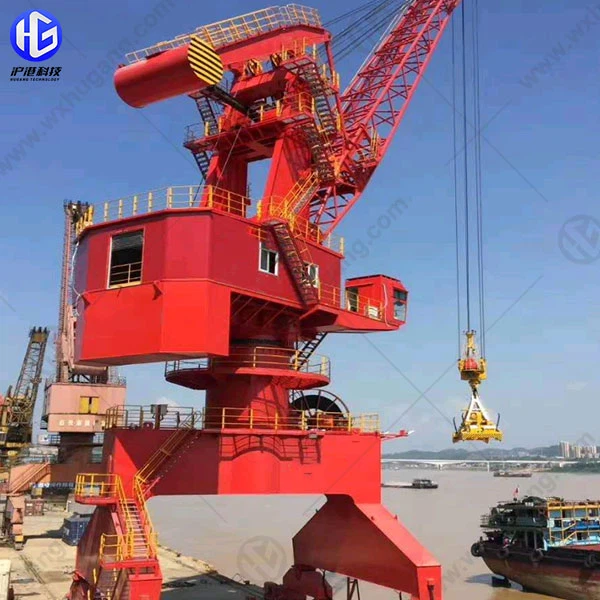
On the other hand, the Single Jib Portal Crane is a simpler design. It might be more cost - effective in some cases, but it may not have the same level of precision and flexibility as the Rack - Luffing Portal Crane. In a corrosive environment, the same principles of material selection and maintenance apply, but the overall performance and suitability depend on the specific requirements of the job.
Real - World Examples
I've seen many instances where Rack - Luffing Portal Cranes have been successfully used in corrosive environments. One of our customers, a chemical plant, needed a crane to handle heavy containers of chemicals. We designed a crane with a stainless - steel structure and a special chemical - resistant coating. After several years of operation, the crane is still in great shape, with only minor signs of wear on the coating.
Another customer in a coastal area used a Rack - Luffing Portal Crane for loading and unloading cargo from ships. We made sure to use a high - quality zinc - rich primer and an epoxy topcoat. Regular inspections and maintenance have kept the crane functioning smoothly, even in the harsh salt - air environment.
Conclusion
In conclusion, a Rack - Luffing Portal Crane can definitely be used in a corrosive environment. With the right design, material selection, maintenance, and inspection, it can withstand the challenges posed by corrosion and provide reliable service for many years.
If you're in the market for a crane for a corrosive environment, don't hesitate to reach out. We've got the expertise and experience to design and build a Rack - Luffing Portal Crane that meets your specific needs. Whether it's for a chemical plant, a coastal port, or any other corrosive setting, we can help you find the right solution.
References
- ASCE (American Society of Civil Engineers). "Corrosion of Steel in Concrete: Understanding, Investigation, and Repair."
- NACE International. "Corrosion Basics: An Introduction."
- Crane Manufacturers Association of America. "Crane Design and Maintenance Standards."